13 May 2026
Empowering Dictus with LUMI supercomputer HPC
Dictus trained speech models on far more Nordic data than its own hardware allowed – with fewer errors and GDPR-compliant results.
In this success story, EuroCC Denmark enabled the Danish Meteorological Institute (DMI) to train AI-based weather nowcasting models on the GPU-powered LUMI supercomputer, transforming forecast latency from hours to minutes. The project demonstrates how access to European HPC resources accelerates the transition from traditional physics-based weather prediction to AI-driven meteorology, benefiting sectors from renewable energy to disaster management.
The Danish Meteorological Institute (DMI) is Denmark’s official weather and climate service, providing reliable meteorological information and forecasts. Established in 1990, the DMI is responsible for weather warnings, climate monitoring, and oceanographic data. It supports public safety, environmental protection, and research by providing accurate weather predictions, climate analyses, and atmospheric observations for Denmark, Greenland, and the Faroe Islands.
Traditional numerical weather prediction (NWP) models require extensive computational resources, often running on supercomputers for several hours. This leads to outdated forecasts with limited spatial and temporal resolution. Furthermore, the high energy consumption of these models raises sustainability concerns.
Nowcasting is fundamental for short-term weather predictions, particularly in rapidly changing conditions such as severe storms, heavy rainfall, and sudden temperature shifts. High frequency, high-resolution nowcasts enable critical decision-making in industries like aviation, renewable energy, and emergency management, where even a few minutes of advanced warning can make a significant difference. The challenge was to develop an AI-based nowcasting solution that delivers accurate, high-resolution forecasts in near real-time while reducing computational costs.
DMI gained access to the LUMI GPU-powered supercomputer to train two machine learning models, LDCast and SHADECast (Leinonen et al. (2023) and Carpentieri et al. (2025)), for rainfall and solar radiation nowcasting. These models use deep learning architectures trained on weather observations (radar rainfall imagery and satellite cloud imagery), capturing complex atmospheric patterns based on observations.
By using AI-driven techniques, these models can generate predictions in minutes, significantly improving forecast timeliness and spatial precision. Unlike conventional approaches, which rely on physics-based simulations with high computational costs, these machine learning models learn from historical and real-time data to make rapid, data-driven forecasts. This allows for dynamic updates as new observations become available, ensuring that predictions remain as accurate and relevant as possible.
National weather services traditionally rely on high-performance computing (HPC) resources optimised for numerical weather prediction (NWP), using in-house large-scale supercomputers dedicated to physics-based simulations. However, these institutions typically lack access to the specialised GPU infrastructure required for emerging AI-based forecasting techniques. This gap presents a major challenge, as AI-driven forecasting and nowcasting methods require high-speed parallel processing for training, which standard CPU-based HPC architectures are not designed to support.
Through EuroCC Denmark, access to GPU-powered supercomputing resources, such as LUMI, proved fundamental in allowing the DMI weather models team to explore and develop machine learning approaches for weather nowcasting. Without this kind of access, the transition toward AI-enhanced meteorology would have been significantly slower, limiting the ability to compete in this rapidly evolving field. The availability of GPU resources enabled the DMI team to experiment with deep learning architectures, train high-resolution models efficiently, and validate their performance against traditional nowcasting and forecasting techniques.
By integrating AI-based nowcasting into operational workflows, national weather services and private industry partners achieve more rapid and precise weather predictions, benefiting sectors such as renewable energy, agriculture, and disaster management. The project also strengthened Europe’s position in AI-driven meteorology, fostering new collaborations, funding opportunities, and industry adoption of next-generation forecasting technologies.
More use cases
13 May 2026
Dictus trained speech models on far more Nordic data than its own hardware allowed – with fewer errors and GDPR-compliant results.
08 Apr 2026
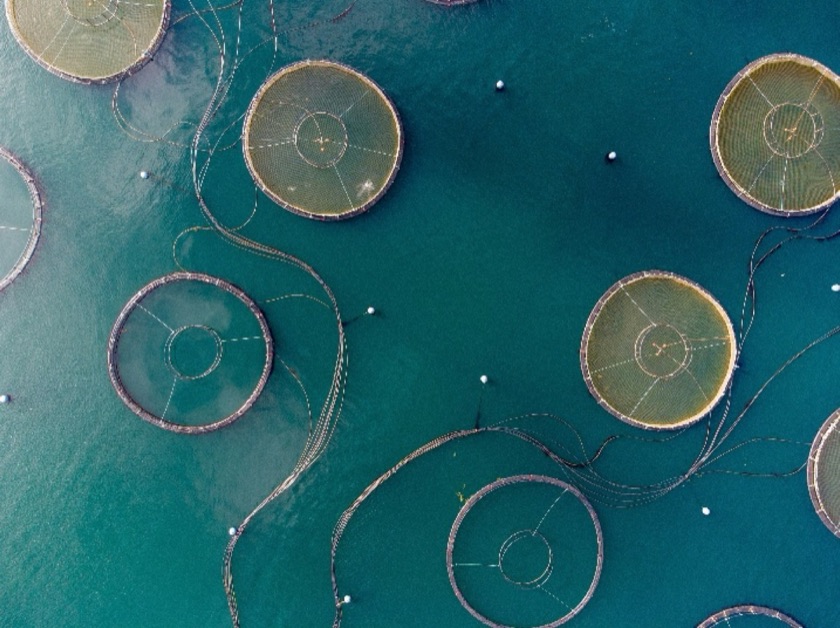
Processing one day of ocean images took nearly six days. On EuroHPC systems, FP AQUA's AI pipeline now scales with the data.
11 Mar 2026
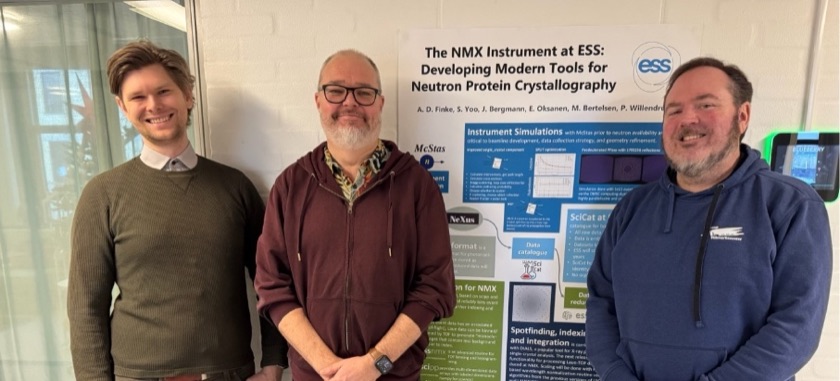
ESS simulated its NMX neutron instrument on LUMI-C – scaling from 10⁷ to 10¹² neutron rays, long before the first beam.