24 Jun 2026
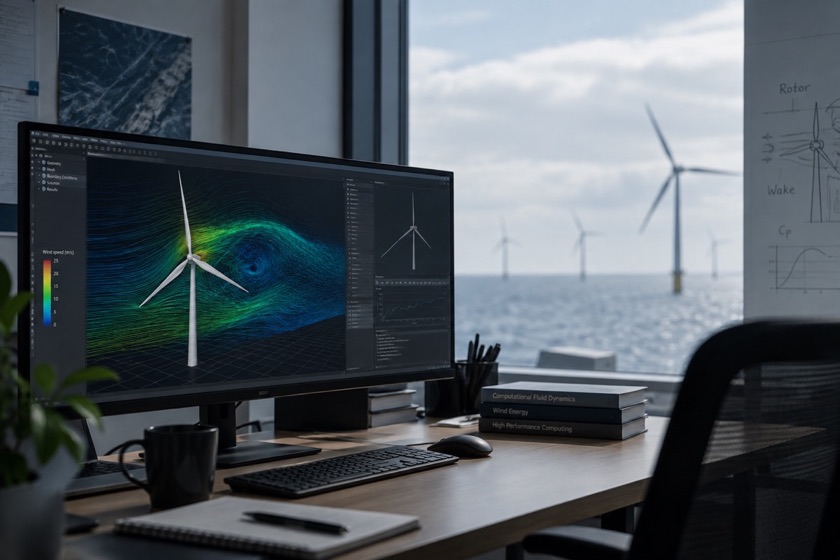
Advancing AI-driven weather nowcasting with DMI
The Danish Meteorological Institute trained AI nowcasting models on LUMI's GPUs – cutting forecast latency from hours to minutes.
In this success story, EuroCC Denmark helped the Danish AquaTech startup FP AQUA access two European supercomputers, MareNostrum in Spain and the MeluXina-AI Factory in Luxembourg, to accelerate AI-driven underwater microscopy for ocean monitoring and aquaculture. The project turned an impossible compute bottleneck, where processing a single day’s data took nearly six days, into a scalable pipeline for identifying microscopic marine lifeforms.
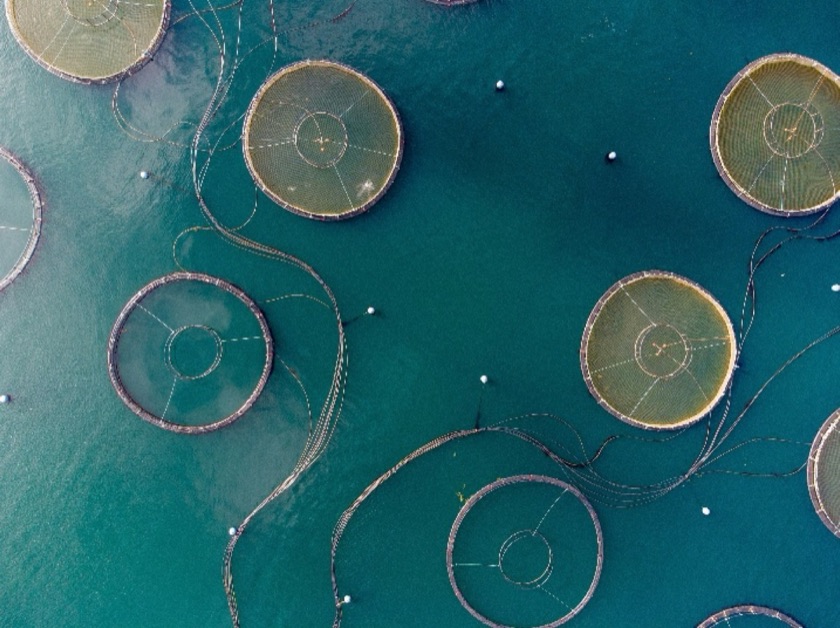
FP AQUA is a Danish AquaTech startup specialising in continuous underwater microscopy and using AI (ResNet / YOLO / Image Recognition / SAM / Autoencoders) to automatically train, classify and identify microscopic lifeforms in the ocean. They are at the forefront of transforming aquaculture with innovative technology that addresses critical challenges for industry and biodiversity. Their technology focus is dual-purpose:
FP AQUA’s core technological challenge is the large-scale processing and analysis of ultra-high-resolution underwater microscopy data. With three active sensors operating continuously at different locations in Norway, the company currently collects approximately 6,000 images per day, each with a resolution of up to 64 megapixels. Even after extensive filtering, the resulting data volume exceeds the processing capacity of the existing hardware infrastructure.
A critical bottleneck lies in image segmentation and model training. Due to GPU memory limitations, full-resolution images must first be subdivided before analysis. As a result, processing a single day of collected data required nearly six days of computation, preventing near real-time analysis and limiting the scalability of the overall workflow. Based on current estimates, at least six times more computational capacity would be required to match the daily data ingestion rate, while a substantially larger increase would be needed to support the complete processing pipeline at scale.
In parallel, FP AQUA aims to advance its AI-based analysis capabilities. The marine environment contains an extremely large diversity of planktonic organisms, including zooplankton, phytoplankton, and microscopic jellyfish, many of which exhibit subtle morphological and chromatic differences. To address this challenge, the company seeks to develop and train advanced autoencoder models capable of automatically clustering detected organisms into biologically meaningful species groups based on visual similarities.
Furthermore, FP AQUA aims to significantly accelerate the training of its existing computer vision models, including YOLO-based object detection systems, while maintaining or increasing image resolution. Current training cycles require approximately 30 hours even at reduced image resolution, creating a constraint on model development, experimentation, and deployment.
EuroCC Denmark supported FP AQUA in accessing EuroHPC resources to accelerate two key AI workflows: autoclustering with autoencoders and object detection with YOLO. These models now run on the MeluXina GPU AI Factory, which offers the CUDA-compatible Nvidia GPUs they rely on. The EuroCC Denmark team facilitated the transition from local infrastructure to HPC, ensuring that image segmentation and classification tasks could scale efficiently.
With access to European supercomputers, FP AQUA can now process and analyse millions of images in a fraction of the time. This leap in performance enables faster detection of emerging threats in aquaculture and more effective monitoring of ocean biodiversity, all without the burden of in-house server maintenance or debugging.
More use cases
24 Jun 2026
The Danish Meteorological Institute trained AI nowcasting models on LUMI's GPUs – cutting forecast latency from hours to minutes.
13 May 2026
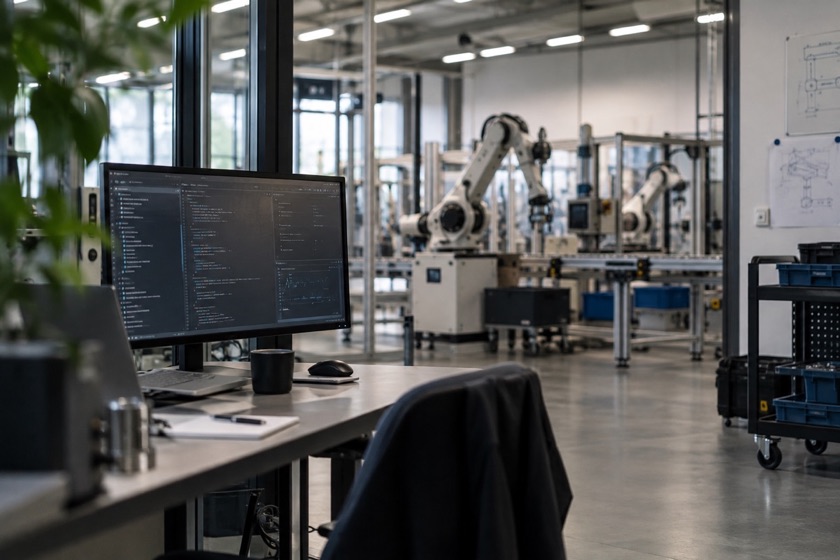
Dictus trained speech models on far more Nordic data than its own hardware allowed – with fewer errors and GDPR-compliant results.
11 Mar 2026
ESS simulated its NMX neutron instrument on LUMI-C – scaling from 10⁷ to 10¹² neutron rays, long before the first beam.